28 Jul 2025
Training and Awareness Sessions for Fire Management in the Sharr-Korab Protected Massif
Training and awareness sessions for fire management in the Sharr-Korab protected massif continue to be conducted. Within the framework of the project "Protection and Sustainable Use of Protected Areas in Shar Mountain, Mavrovo, and Korab-Koritnik," financed by the PONT program – Prespa Ohrid Nature Trust, implemented by ALCDF and partners CSCD and LAG Dibra Turistike, awareness-raising and training activities for fire management in protected areas have continued throughout this period. Although the fire situation in the region this year has been critical, fortunately, the Sharr-Korab area has not been affected by massive fires during this period, but rather by several periodic fire spots which have been managed in a timely manner, isolated, and prevented from spreading massively.
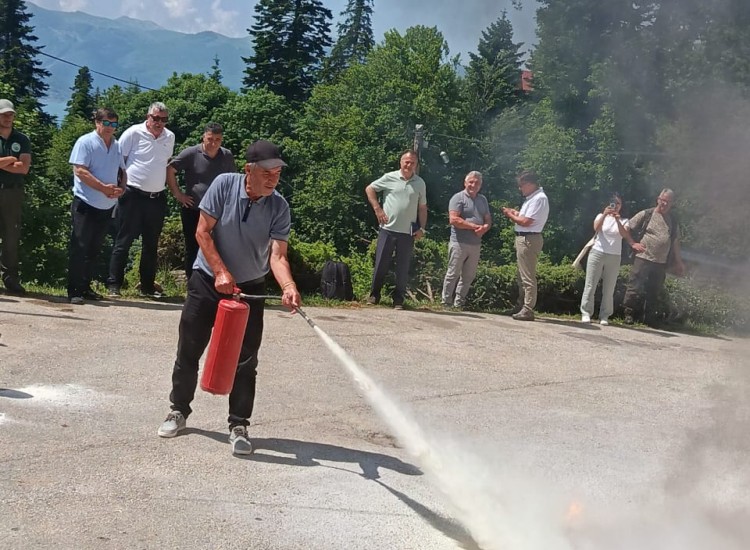
With the group of fire management experts in protected areas, Mr. Ariol Lila from the Western Balkans regional program for Fire Management in Natural Landscapes, and Professor Ervin Toromani from the Faculty of Forest Sciences at the Agricultural University of Tirana, practical training sessions were organized with teams from protected areas, forests and pastures in municipalities and communes, fire stations, civil emergency structures, and representatives from community monitoring and surveillance units in the areas of Shar Mountain, Mavrovo, and Korab-Koritnik. Fire protection training in protected areas, such as national parks or reserves, focused on prevention, detection, and response to fires, and comprised a combination of skills training and knowledge of specific ecological contexts, such as fire behavior in forests, fire prevention techniques, fire suppression methods, and emergency response procedures adapted to the unique challenges of protected areas.
Training sessions extensively covered fire prevention processes, emphasizing techniques for reducing the risk of ignitions caused by humans and natural factors, such as public education, controlled burning, and fuel management. Particular emphasis was placed on planning investments and preventive measures in the annual budgets of municipalities and protected areas, and organizing structures with adequate human resources that must be trained. Additionally, practical training sessions were conducted on fire suppression, using various tools and strategies to control and extinguish fires, including hand tools, water supply systems, and aerial firefighting. Participants were particularly interested in the specific knowledge regarding damage assessment to ecosystems following fires, assessment methodologies, reporting, and understanding how fire has affected not only the damage to timber forest resources but also biodiversity values with specific groups of plants and animals within the protected area, and how to calculate other ecological effects.
Special meetings were conducted with emergency response task force groups, where legal procedures, coordination and inter-institutional relations, incident management skills development, communication, search and rescue, and medical assistance in fire situations were discussed. Experts focused in these meetings on elements of safety procedures, personal protective equipment, safe work practices, and hazard identification, ensuring the safety of firefighters and other personnel, in compliance with emergency procedures and communication protocols.
Community involvement was an important element throughout the entire cycle of fire prevention measures in protected areas. The engagement of local communities in fire prevention and response efforts will significantly increase the effectiveness of fire management in protected areas. Continuous awareness campaigns, media utilization, and creation of effective community structures are essential elements in effective fire management. Furthermore, these awareness-raising meetings should be harmonized with a continuous education process for professional development of new firefighter teams, protected area rangers, and community members with the appropriate technical skills and knowledge and professional competencies.